


Read about what is laminated glass and the benefits when used in a window.
Our triple glazed windows are our most energy-efficient, with an A++ energy rating.
Frames & Hardware
Glazing Options
Useful Info
Useful Info
Useful Info
Our Collections
Case Studies
Useful Info
Frames & Hardware
Glazing Options
Useful Info
Useful Info
Useful Info
Our Collections
Case Studies
Useful Info
Read about what is laminated glass and the benefits when used in a window.
In today’s architectural landscape, where safety, security, and aesthetic appeal converge, laminated glass has emerged as an indispensable solution.
This innovative glass product not only enhances the resilience of structures but also offers a myriad of benefits that cater to diverse residential and commercial needs.
Laminated glass is a composite material that combines two or more layers of annealed glass with a resilient interlayer, typically made of polyvinyl butyral (PVB) or other specialized resins.
This interlayer acts as a robust adhesive, bonding the glass panes together through a process of heat and pressure application, resulting in a unified, high-performance glazing solution.
The creation of laminated glass involves a meticulously controlled manufacturing process that ensures optimal performance and durability. Here’s an overview of the steps involved:
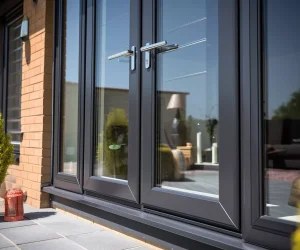
Keep your loved ones and pets safe with safety glass in your doors and windows.
Laminated glass offers exceptional acoustic insulation properties, making it an ideal solution for reducing unwanted noise pollution. The interlayer acts as a damping material, disrupting sound waves and minimizing their transmission through the glass.
This feature is particularly beneficial for residential properties located near airports, busy roads, or other noise-generating environments.
The PVB interlayer used in laminated glass effectively blocks up to 99% of harmful ultraviolet (UV) rays, preventing the fading and discoloration of interior furnishings, artwork, and flooring.
This attribute not only enhances the longevity of your valuable possessions but also contributes to a more comfortable living or working environment.
While laminated glass and toughened glass each possess their unique strengths, combining these two technologies can create a formidable glazing solution that offers unparalleled performance and versatility.
This hybrid approach, often referred to as “toughened laminated glass,” leverages the best of both worlds, providing a robust and secure glazing option for a wide range of applications.
In toughened laminated glass, the outer panes undergo a heat-treatment process similar to that of toughened glass, increasing their strength and resistance to impact. These toughened panes are then bonded together with a resilient interlayer, creating a composite structure that combines the shatter resistance of toughened glass with the impact resistance and security features of laminated glass.
View the Super Glazing range of specialist glass and glazed units.
The thickness of laminated glass plays a crucial role in determining its performance characteristics and suitability for various applications. By carefully selecting the appropriate glass pane and interlayer thicknesses, architects and builders can tailor the properties of laminated glass to meet specific project requirements.
The thickness of laminated glass is typically expressed as a series of numbers separated by periods, representing the individual thicknesses of the glass panes and the interlayer.
For example, a laminated glass unit with the designation “6.8.6” would consist of two 6mm glass panes sandwiching an 8mm interlayer.
In environments where noise pollution is a concern, acoustic laminated glass emerges as a game-changer. This specialized variant of laminated glass incorporates a thicker interlayer, typically ranging from 0.76mm to 1.52mm, designed to dampen sound waves more effectively.
The unique properties of acoustic laminated glass stem from the combination of the interlayer’s damping capabilities and the dissimilar thicknesses of the glass panes.
This configuration causes the panes to vibrate at different frequencies, disrupting the transmission of sound waves and significantly reducing noise levels.
Book your free quotation appointment with one of our expert consultants who will:
Book your free quotation appointment with one of our local consultants who will discuss your requirements, show you samples and provide you with a free no-obligation quote.